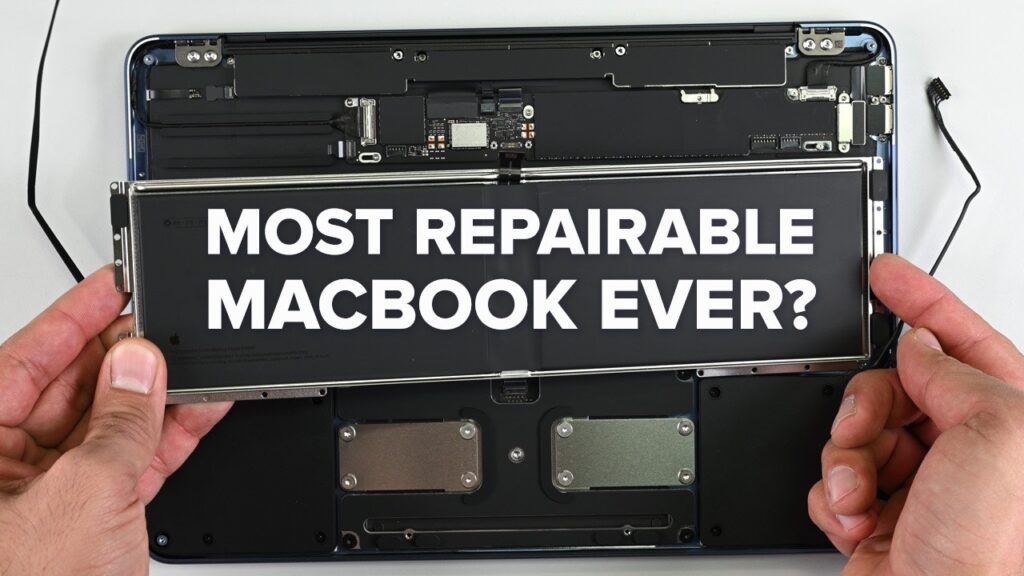
MacBook Neo repairability — Apple’s new MacBook Neo isn’t just breaking records on price — it’s also breaking a 14-year streak when it comes to repairability. According to a detailed teardown by iFixit, the popular repair-guide website, the Neo represents the most repairable MacBook that Apple’s released in roughly a decade and a half. Here’s what changed, and why it matters for anyone who’s ever paid hundreds of dollars to fix a laptop.
Macbook Neo Repairability: The Battery Game-Changer
The headline finding from iFixit’s teardown is surprisingly simple: Apple finally ditched the glue. The MacBook Neo’s battery isn’t permanently bonded to the chassis like older models. Instead, it’s held in place by a tray secured with 18 screws.
Sounds like a small thing? It isn’t. “Screws still beat adhesive every time,” iFixit declared, and the announcement apparently sparked genuine celebration in their offices. For context, if your MacBook battery dies — and lithium batteries do die — you’re looking at a repair that could’ve cost you a small fortune under the old adhesive system. Now, a technician or even a determined DIY enthusiast could theoretically swap it out without destroying the entire machine.
This single change represents a fundamental shift in how Apple thinks about repairability, at least for this model. It’s the kind of practical design decision that suggests someone at Apple was actually listening to the repair community’s complaints.
What Else Makes the MacBook Neo More Repairable
The battery redesign isn’t the only improvement iFixit noted. The Neo features what they call a “flat disassembly tree,” which is technical speak for a logical, straightforward teardown process. Translation: you don’t have to remove Part A to reach Part B to finally access Part C. The repair path is cleaner.
Another win: Apple’s Repair Assistant software apparently accepts third-party replacement parts without throwing error codes or refusing to cooperate. That’s huge. In recent years, some Apple devices have essentially bricked themselves when technicians tried installing non-Apple components. The Neo doesn’t seem to have that gatekeeping problem — at least not yet.
The display and keyboard are also easier to replace than in previous MacBook generations, iFixit found. These aren’t revolutionary changes, but they’re the kind of incremental improvements that actually matter when you’re sitting in a repair shop or attempting a fix at home.
Related: MacBook Air M5 Review: Iterative Speed in a Multi-Tier
Still Not Perfect: Why the Score Is Only 6 Out of 10
Before you get too excited about Apple suddenly becoming the repair-friendly company you’ve always wanted, let’s talk about what iFixit didn’t like. The MacBook Neo still earned only a 6 out of 10 on the repairability scale. For a MacBook, iFixit said that’s “a strong score” — but it’s still a C-grade, not an A.
The main culprits? RAM and storage are soldered directly to the logic board, meaning you can’t upgrade or replace them without specialized equipment. That’s a significant limitation that affects longevity. You’re stuck with whatever configuration you buy, which for a lot of users is a real problem. Soldering components creates a hard ceiling on your device’s useful lifespan.
So here’s the reality: the MacBook Neo is substantially more repairable than what Apple’s been shipping, but it’s not exactly a repair technician’s dream machine. It’s a compromise. But sometimes compromise is progress, especially when the previous baseline was so poor. A 6 out of 10 for a MacBook represents genuine improvement, even if it’s not perfection.
Key Takeaways
- Apple replaced glued-in batteries with a screw-secured tray on the MacBook Neo, marking the most significant repairability improvement in a MacBook in 14 years.
- The Neo scores 6 out of 10 on iFixit’s repairability scale — the highest for any MacBook — thanks to easier access, simpler disassembly, and third-party part compatibility.
- Soldered RAM and storage remain barriers to true repairability, meaning you can’t upgrade these components after purchase, but the overall design signals Apple may be shifting its repair philosophy.