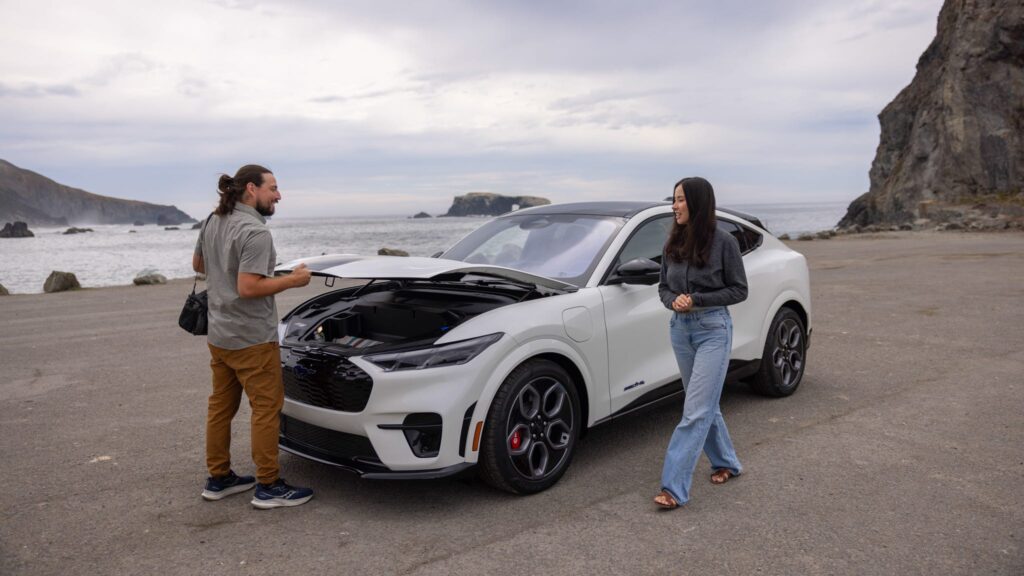
Electric vehicles have revolutionized how we think about car design, and the 2026 Mustang Mach-E frunk is a perfect example of innovative engineering. However, Ford has made a surprising decision that’s catching the attention of potential buyers: the company is now charging $495 for the front trunk feature on its popular electric SUV, a feature that was included at no extra cost on previous model years. This shift represents a notable change in how Ford is approaching vehicle pricing and standard equipment, raising important questions for anyone considering this popular EV.
2026 Mustang Mach-E Frunk: Understanding the Frunk and Why Ford Made T
For those unfamiliar with the term, a frunk is essentially a front trunk that takes advantage of the extra space created when you remove a traditional gasoline engine. Electric vehicles don’t need that engine compartment, so manufacturers can repurpose that valuable real estate for cargo storage. It’s one of the clever perks of going electric, offering additional storage capacity that traditional gas-powered vehicles simply can’t provide.
Ford’s decision to charge for this feature stems from market research and usage data. According to reports, Ford’s engineering team discovered that many Mach-E owners weren’t actually using the frunk storage space. Rather than continuing to include a feature that customers apparently didn’t value enough to regularly use, the company decided to make it optional and charge owners who want it installed. This reflects a broader trend in the automotive industry where manufacturers are becoming more data-driven about which standard features justify their manufacturing costs.
The $495 price tag for the frunk installation isn’t outrageous when you consider the cost of designing, manufacturing, and installing the component. However, the timing and method of implementation have raised eyebrows among enthusiasts and potential buyers who see this as removing value rather than adding it. Some customers feel that if the frunk was worth including before, it should remain a standard feature rather than becoming an optional upgrade.
Pricing Impact: Why You’re Not Actually Saving Money on 2026 Mustang Mach-E Models
Here’s where things get interesting from a pricing perspective. Yes, Ford has officially reduced the starting price of the 2026 Mustang Mach-E. The RWD Select base model now starts at $39,850, down from $39,990 in the 2025 model year. That’s a $140 reduction, which sounds good on paper. However, the math reveals a deceptive pricing strategy that’s actually costing consumers money if they want the same vehicle configuration they could have purchased the year before.
Let’s break down the real-world impact. If you want a 2026 RWD Select with the frunk feature, you’re looking at a total price of $40,335. Compare that to the 2025 model with the frunk included as standard, which cost $39,990, and you’re paying $345 more for essentially the same vehicle. That’s a hidden price increase disguised as a base price reduction. This pricing tactic can be confusing for shoppers who focus only on advertised starting prices without considering what those base prices actually include.
The situation gets worse when you look at the 2026 Mach-E Rally trim. Ford removed the rear spoiler and Rally decal package from the standard equipment, making those features optional. The spoiler alone costs $995. The Rally trim now starts at $59,735, down from $60,485 in 2025, but adding back the spoiler and frunk brings the total to approximately $61,225, which is nearly $1,490 more than the previous year. Most frustrating for buyers is that there’s currently no option to add just the Rally decals without purchasing the entire rear spoiler package. This segmentation of standard features into paid options represents a net loss in value for consumers.
What This Means for EV Buyers and the Future of Vehicle Pricing
Ford’s decision to unbundle standard features and charge separately for them reflects a larger trend happening across the automotive industry, particularly among electric vehicle manufacturers. This approach—sometimes called “nickel and diming” customers—is becoming increasingly common as companies seek to manage production costs and improve profit margins. Understanding this trend is important for anyone shopping for vehicles today or in the near future.
From a consumer perspective, this pricing strategy has several implications. First, it makes comparison shopping more complicated. Advertised starting prices become less meaningful when critical features must be purchased separately. A buyer focused solely on the headline MSRP might be shocked when they discover the actual cost of their vehicle once they’ve selected all desired options. This is particularly problematic for features like the frunk that directly relate to an EV’s unique advantages over gas-powered vehicles.
Second, this trend gives manufacturers more flexibility in their pricing architecture. By removing features from standard equipment, companies can advertise lower base prices that look attractive in advertisements and online listings. Yet most customers still end up paying more for the same or fewer features than they would have the previous model year. It’s a psychological pricing tactic that plays on consumers’ attraction to lower numbers, even when those numbers don’t reflect the actual value proposition.
For EV shoppers specifically, the implications are worth considering. Electric vehicles are already more expensive than their gas-powered equivalents in many cases, primarily due to battery costs. Features like the frunk have been marketed as advantages of going electric, offsetting some of the price premium. When manufacturers start charging extra for these EV-specific benefits, it reduces the tangible advantages of choosing electric. As the EV market becomes more competitive and more consumers have choices, these pricing decisions could influence whether someone commits to switching to an electric vehicle or sticks with a traditional car. Savvy buyers will need to look beyond base prices and calculate the total cost of ownership for the specific configuration they want, rather than simply comparing headline prices.
For everyday Americans, understanding 2026 Mustang Mach-E frunk has become increasingly important in today’s fast-changing landscape. Whether you are a first-time learner or someone who follows Automotive closely, staying up to date with the latest developments can make a real difference in your decisions. Industry experts have noted that 2026 Mustang Mach-E frunk is one of the most discussed topics in Automotive circles right now. The implications stretch across different demographics, affecting how people approach their daily lives and long-term plans. It is worth noting that 2026 Mustang Mach-E frunk does not exist in a vacuum. It connects to broader trends in Automotive that have been building for years. Understanding the context behind these developments helps paint a clearer picture of where things are headed. Many Americans are asking how 2026 Mustang Mach-E frunk affects them personally. While every situation is unique, the general consensus among analysts is that being informed and proactive is the best approach anyone can take right now.
Key Takeaways
- The 2026 Mustang Mach-E frunk now costs $495 as an optional feature instead of being included standard, and buyers who want the same configuration as the previous year will actually pay more despite the advertised base price reduction.
- Always calculate the total cost of your desired vehicle configuration rather than focusing on advertised starting prices, as manufacturers increasingly use feature unbundling to make base prices appear more attractive while raising overall costs.
- Consider whether optional features like the frunk align with how you’ll actually use the vehicle, and factor these potential add-on costs into your EV purchasing decision, especially when comparing electric vehicles to gas-powered alternatives.